When people hear "digital skills," they usually think of coding. And coding is great — we teach it, we love it, we've seen it transform young people's confidence. But if coding is the only digital skill on your radar, you're looking at a very small piece of a much bigger picture.
The young people growing up right now will enter a job market that looks nothing like today's. Not in a vague, futuristic way — it's already happening. Here are the digital skills that actually matter, and why.
Computational thinking
This is the big one, and most people haven't heard the term. Computational thinking isn't about computers at all — it's a way of approaching problems. Breaking a big problem into smaller parts (decomposition). Spotting patterns. Filtering out irrelevant information (abstraction). Designing step-by-step solutions (algorithms).
A young person who can think computationally can plan a project, debug a process, and work through complex challenges methodically. These skills apply to everything from organising an event to diagnosing why a machine isn't working to writing a business plan.
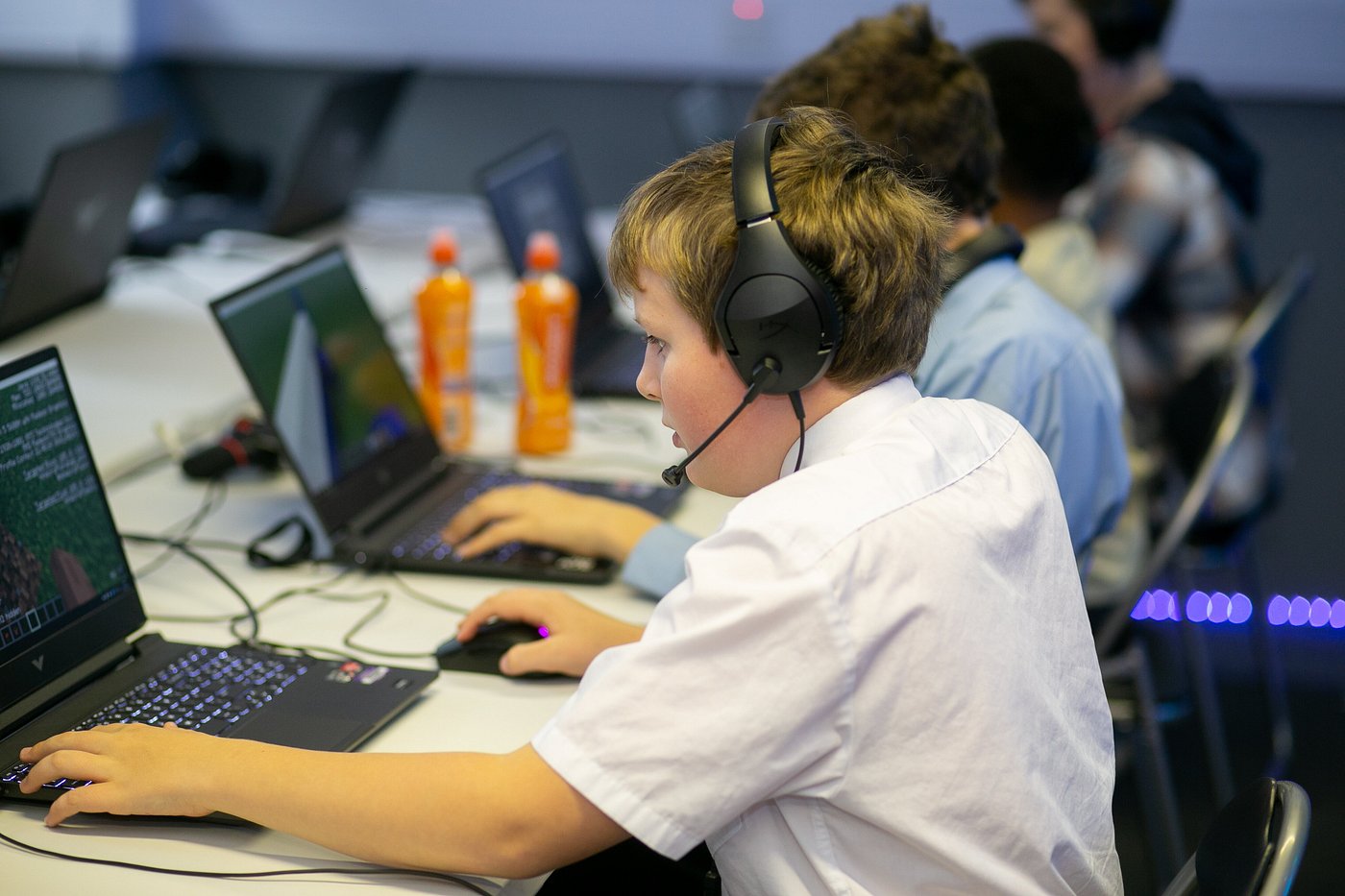
When we teach young people to build games in Minecraft or create projects in Roblox, computational thinking is what they're really learning. The code is just the vehicle.
Digital literacy (not just "knowing how to use a computer")
Most young people can use a phone instinctively. That doesn't mean they're digitally literate. True digital literacy includes:
- Evaluating information. Can they tell a reliable source from misinformation? Do they understand how search algorithms shape what they see? Can they spot a scam email?
- Understanding data. What happens to their personal information when they sign up for an app? What's a cookie, and why does every website ask about them?
- Using tools effectively. Not just social media and games, but spreadsheets, documents, presentations, email — the unglamorous tools that every workplace relies on.
Schools cover some of this, but it's often treated as a box-ticking exercise rather than a genuine life skill. We need young people who don't just use technology but understand it.
Online safety
This goes beyond "don't talk to strangers online" (though that matters too). Young people need to understand privacy settings, digital footprints, the permanence of what they post, and how to handle situations like cyberbullying, unwanted contact, or peer pressure around sharing images.
The most effective online safety education doesn't rely on scare tactics. It treats young people as capable of making good decisions when they have the right information and the confidence to act on it.
Creative digital tools
Video editing. Graphic design. Music production. 3D modelling. Animation. These aren't niche hobbies — they're employable skills with growing demand across industries. A young person who can edit a video, design a logo, or create a 3D asset has tangible, marketable abilities.
Many neurodivergent young people are drawn to creative tools because they allow for self-expression without the constraints of written or verbal communication. We see this constantly — a young person who struggles to write an essay will create a stunning piece of digital art or a beautifully edited video without breaking a sweat.
AI awareness
This is the newest addition to the list, and it's arguably the most urgent. AI is already embedded in the tools young people use daily — from predictive text to recommendation algorithms to AI-generated content.
Young people need to understand what AI is and isn't. They need to know that AI can be wrong, biased, and confidently incorrect. They need to learn how to use AI tools effectively — as assistants, not replacements for thinking. And they need to grapple with the ethical questions: whose data trained this model? Who benefits? Who's harmed?
This isn't about turning every young person into an AI engineer. It's about ensuring they're informed users rather than passive consumers of technology that increasingly shapes their world.
Why employability matters now
Here's a sobering statistic: young people with SEND are significantly less likely to be in education, employment, or training after leaving school. The gap is real, and it's persistent. Digital skills are one of the most direct routes to closing it.
Technology careers are growing faster than almost any other sector. Many tech roles value skills and portfolios over formal qualifications. Remote work is common, which matters enormously for people whose disabilities make traditional workplaces challenging. And the starting salaries are good.
When a young person at one of our clubs builds a Roblox game or creates a Minecraft mod, they're not just having fun (though they are). They're building a portfolio. They're developing the kind of problem-solving, creative, and technical skills that employers are desperate for.
Where to start
If you're a parent wondering how to help your child develop these skills, the good news is that interest-led learning is the most effective approach. Find out what your child is excited about — gaming, art, music, video, robotics — and look for ways to deepen that interest into genuine skill development.
Player Ready runs coding clubs and tech sessions across Plymouth, Exeter, Taunton, Truro, Portsmouth, and online. We focus on exactly these skills, delivered through activities that young people actually enjoy. Have a look — you might be surprised at what your child can do.