There's a particular kind of anxiety that school makes worse. The fear of getting it wrong in front of people. The dread of being asked a question you don't know the answer to. The paralysis of a blank worksheet while everyone else seems to be writing. For young people who live with this every day, school isn't just hard — it feels genuinely unsafe.
Coding, oddly enough, can help. Not as therapy (we're not therapists), but as a space where the rules are different enough that anxious young people can breathe.
Why Code Is Different
Here's the thing about writing code: it expects you to get it wrong. Every programmer in the world spends most of their time dealing with errors. Debugging isn't failure — it's literally the job. When a young person writes a line of Lua in Roblox Studio and gets a red error message, that's not a bad mark. It's information. Something to investigate, understand, and fix.
This is quietly revolutionary for someone who's spent years associating mistakes with shame.
In our coding clubs, we see the shift happen. A young person who arrived hunched over, barely making eye contact, quietly tries something. It doesn't work. They look at the error, tweak the code, run it again. It works. And there's this moment — small but unmistakable — where they sit up a little straighter.
Small Wins, Stacked Up
Coding gives you wins constantly. You make a character move. You change a colour. You add a sound effect. Each one is tiny, but each one is yours. You made it happen. Nobody did it for you.
For anxious learners, this accumulation of small successes does something important: it builds evidence against the belief that "I can't do anything." Because actually, you just made a game character jump. Then you made it double-jump. Then you added a scoring system. Each step is proof of capability, and the proof is right there on screen.
We structure our club sessions around this principle. Whether a young person is learning Minecraft modding, Roblox scripting, or Unity development, the sessions are designed so they create something visible in every single session. Not a worksheet. Not notes. Something that works.
No Audience Required
One of the biggest anxiety triggers in school is the social element. Being watched. Being compared. Being called on to present or perform. Coding removes most of that pressure.
You work at your own screen, at your own pace. Nobody sees your code unless you choose to show them. There's no leaderboard, no marking, no "let's see who finishes first." If you want to share what you've made, brilliant. If you'd rather keep it to yourself, that's completely fine too.
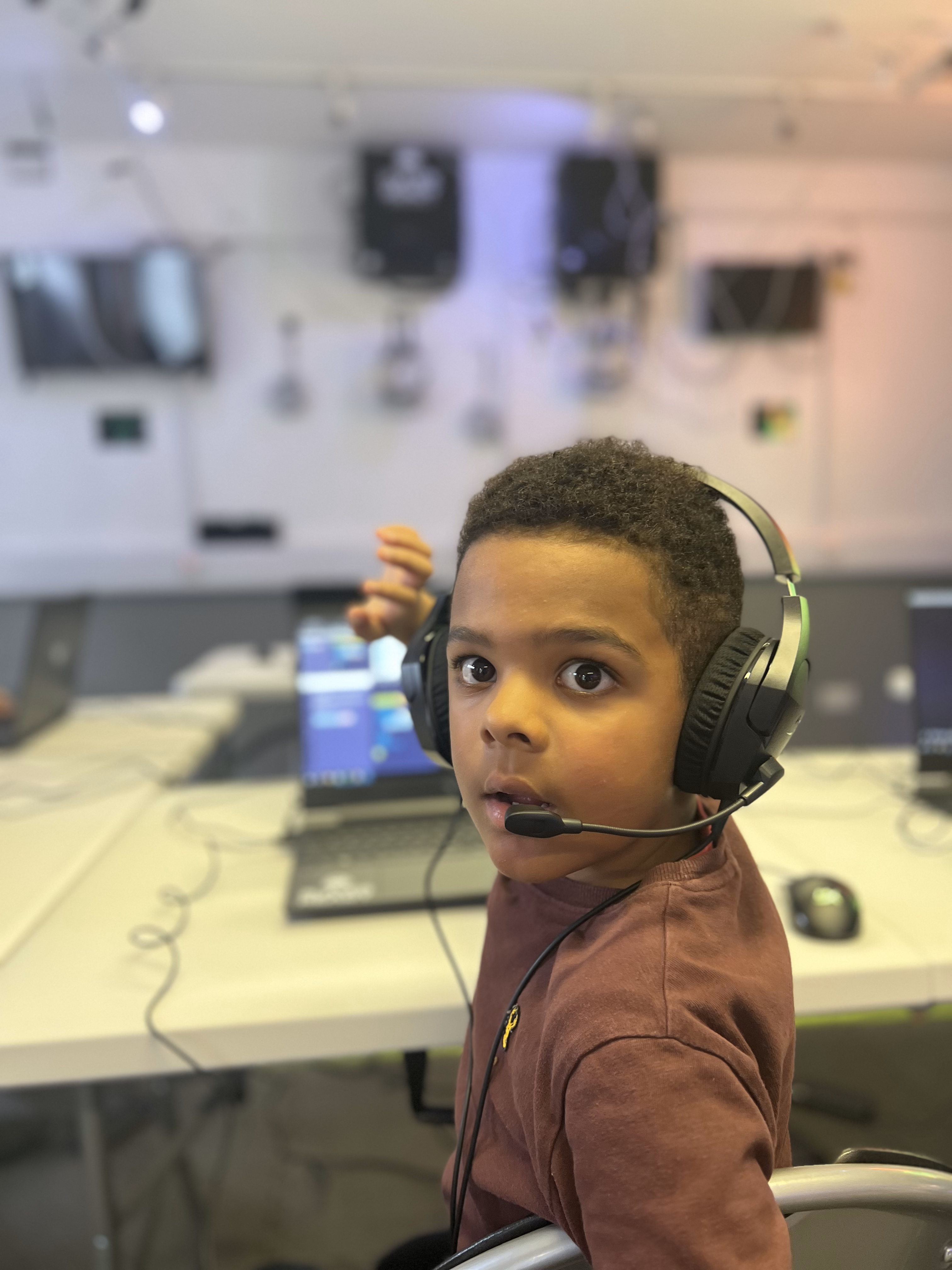
In our clubs, the atmosphere is closer to a studio than a classroom. Young people work on their own projects with a mentor nearby for help. Some chat and collaborate. Others work quietly with headphones on. Both are equally welcome.
The Undo Button Changes Everything
This sounds trivial but it matters enormously: you can undo anything in code. Made a mess? Ctrl+Z. Broke everything? Revert to the last working version. Deleted something important? It's probably recoverable.
For a young person whose anxiety is partly driven by the fear of irreversible mistakes, this is powerful. The stakes are genuinely low. The worst thing that happens is you learn what doesn't work. That safety net — knowing you can always go back — gives anxious learners the freedom to experiment in a way they rarely feel elsewhere.
From Code to Confidence
We're not claiming that learning to code cures anxiety. It doesn't. But we've seen, over hundreds of sessions, that it gives young people a space where they can experience competence. And competence, experienced enough times, starts to look a lot like confidence.
The young person who wouldn't speak in their first session starts explaining their code to a mentor. The one who said "I'm rubbish at everything" shows a friend the game they built. The one who couldn't attend school at all starts asking about post-16 qualifications in game design.
These aren't dramatic transformations. They're gradual, sometimes barely visible week to week. But they're real.
Our coding clubs run across all five Player Ready venues — Plymouth, Exeter, Taunton, Truro, and Portsmouth. We teach everything from beginner Minecraft modding to intermediate Unity and Unreal Engine development. No experience needed, no pressure to keep up, and mentors who understand that sometimes the most important thing is just feeling safe enough to try.
Find your nearest club and see if it might be the right fit.