
Walk into any Player Ready session and there's a good chance you'll see Minecraft on at least one screen. Not because we're lazy about choosing tools — because Minecraft does something that almost no other platform manages. It meets neurodivergent learners exactly where they are and gives them room to grow at their own pace.
Here's why it works so well, and how our mentors actually use it.
A predictable world in an unpredictable life
For many autistic young people, the real world is an assault of unpredictability. Social rules change without warning. Sensory environments shift constantly. Plans get disrupted. People are confusing.
Minecraft is the opposite. The rules are consistent. Blocks behave the same way every time. Creepers always explode. Water always flows downhill. Day and night cycle predictably. For a brain that craves predictability and pattern, this is deeply comforting.
That comfort isn't trivial — it's foundational. When a young person feels safe and regulated, they can learn. When they're anxious and overwhelmed, they can't. Minecraft provides a regulated environment where learning becomes possible for young people who find most other settings too chaotic to function in.
Creative freedom without a blank page
Telling an anxious young person to "be creative" with a blank sheet of paper is a recipe for shutdowns. The possibilities are too open, too undefined. Where do you even start?
Minecraft gives creative freedom within a structure. You build with blocks. They snap to a grid. There are materials with different properties. The constraints actually enable creativity rather than limiting it — in the same way that poetry's rules make it more powerful than random words on a page.
We've seen young people who freeze at "draw whatever you want" happily spend hours building elaborate castles, working farms, underwater bases, and functioning railways. The structure of Minecraft gives them permission to create.
Social play without the hard parts
Many of the young people we work with find face-to-face social interaction genuinely painful. Eye contact is uncomfortable. Reading facial expressions is exhausting. Knowing when to speak, what to say, how to stand — it's a constant calculation that neurotypical people do without thinking.
In Minecraft multiplayer, social interaction happens through shared activity. You're both looking at the screen, not at each other. Communication is about the task: "pass me some cobblestone," "watch out, there's a skeleton behind you," "come and see what I've built." It's natural, low-pressure, and purposeful.
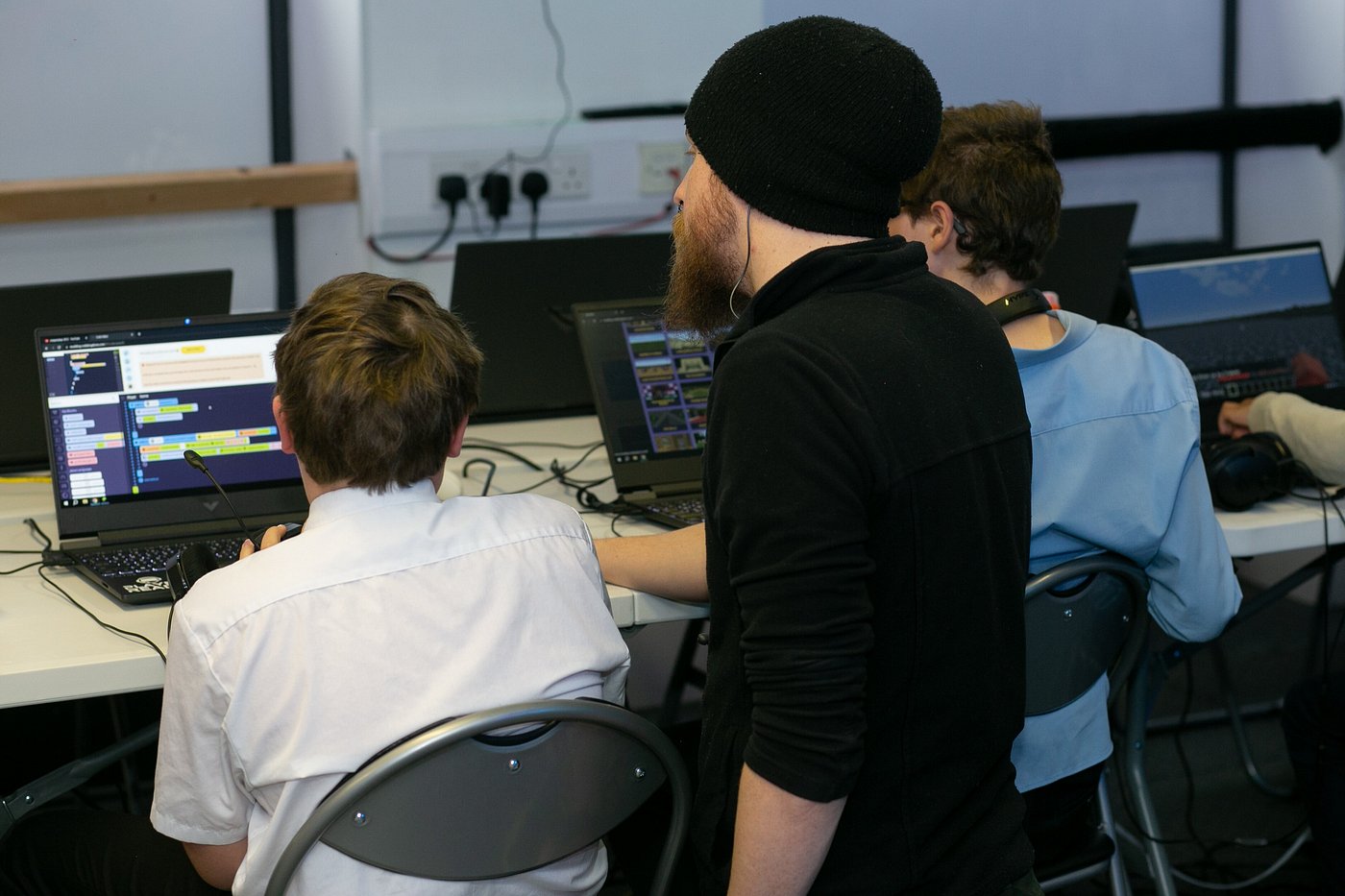
Our mentors use this deliberately. A session might start with both the mentor and young person working on a shared build. Conversation happens organically — about the game at first, then gradually about other things. A young person who wouldn't make eye contact in week one is chatting comfortably by week four. The game provides the scaffolding for social connection.
Modding: the coding gateway
Here's where it gets really exciting. Minecraft modding — creating modifications that change how the game works — is one of the most effective coding gateways we've found for neurodivergent learners.
Why? Because the motivation is already there. A young person who loves Minecraft doesn't need convincing that it would be cool to add a new mob, create a custom biome, or build a mod that lets you fly. They want to do it. The coding is the means to an end they genuinely care about.
We start simply: basic data packs that change game rules, custom crafting recipes, simple resource packs. From there, young people move into more complex modifications using Java (for Java Edition) or add-on creation for Bedrock. Some progress to building full mods with custom game mechanics.
The progression looks like this:
- Editing existing configuration files (understanding data structures)
- Creating custom items and recipes (JSON, logical thinking)
- Writing basic scripts for command blocks (sequencing, conditionals)
- Building redstone circuits (logic gates, computational thinking)
- Creating full mods with Java or add-ons with JavaScript (real programming)
At every stage, the young person can see and play with the result of their work immediately. They're not writing code into a void — they're changing their favourite game. That feedback loop is incredibly powerful for learners who struggle with delayed gratification or abstract concepts.
What mentors actually do
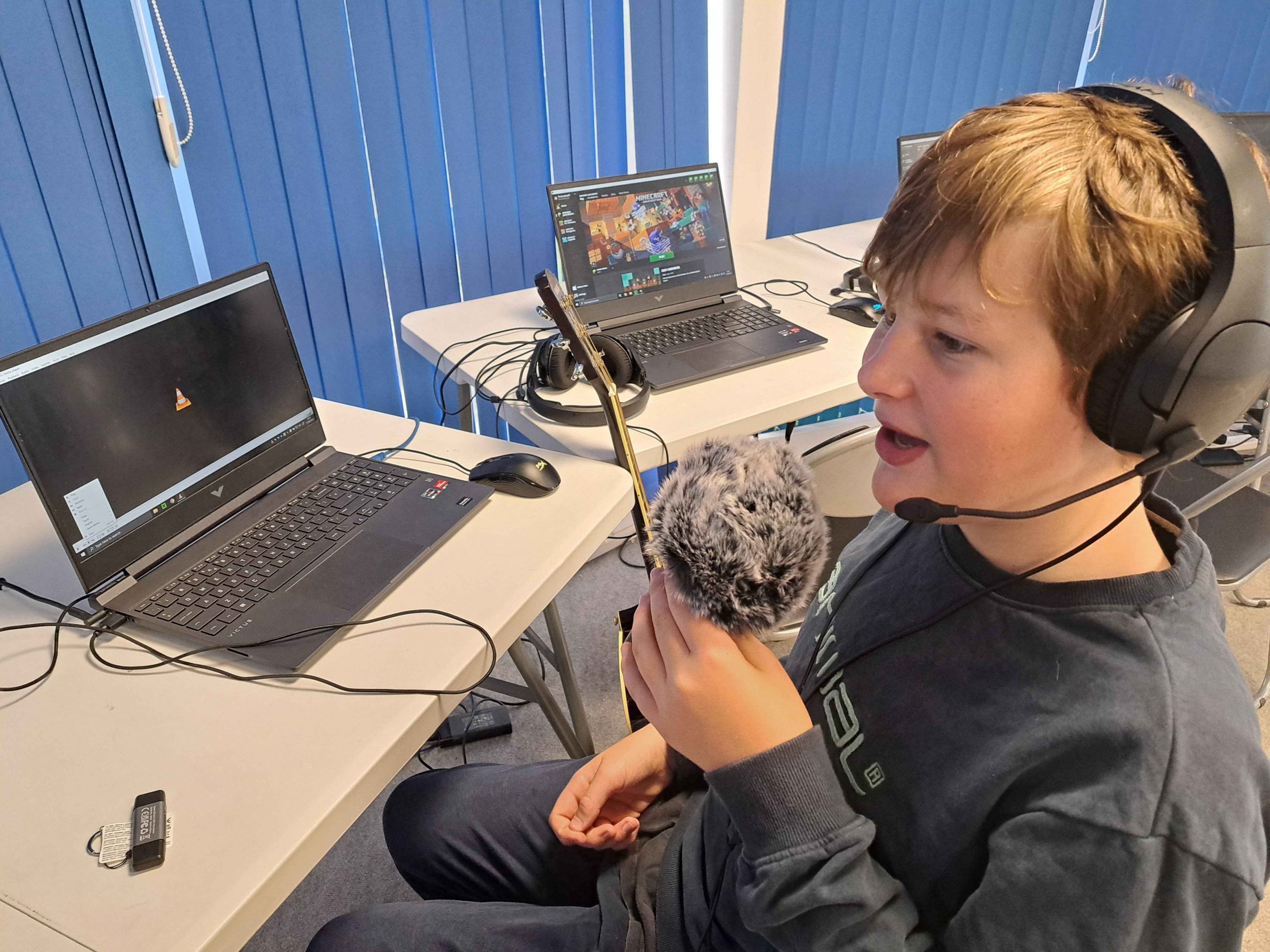
It's worth being specific about this, because "we use Minecraft" could mean anything. Here's what a Player Ready mentor might actually do in a session:
For a young person working on maths: Build a village shop where items have prices. The young person has to calculate costs, make change, work out bulk discounts. They're doing maths — they just don't think of it that way.
For a young person working on communication: Collaborative building where they have to explain their plan, negotiate resources, and compromise on design decisions. Social skills practice embedded in a shared project.
For a young person working on emotional regulation: Survival mode, where things go wrong (creepers blow up your house, you fall in lava). The mentor models frustration tolerance and helps the young person develop coping strategies in a safe, low-stakes context.
For a young person working on coding: A structured modding project that introduces programming concepts through something they're passionate about. Variables become item properties. Functions become crafting recipes. Debugging becomes "why isn't my mod working?"
It's not just a game
We've had young people arrive at Player Ready who hadn't engaged with any form of education for over a year. Some hadn't left their bedroom in months. Minecraft was the thing that got them through the door — or onto a video call — because it was familiar, safe, and something they were already good at.
From there, everything else becomes possible. Confidence grows. Skills develop. Relationships form. And a young person who the system had essentially given up on starts to thrive.
That's not the magic of Minecraft. It's the magic of meeting a young person where they are and building from there. Minecraft just happens to be a remarkably good place to start.
If you'd like to find out more about how we use Minecraft and gaming in our alternative provision and club sessions, we'd love to hear from you.