If you've ever watched a young person who struggles to sit through a ten-minute lesson suddenly spend three hours building a redstone contraption in Minecraft, you already know something that research is only just catching up with: gaming isn't the enemy of learning. For many neurodivergent young people, it's the gateway.
The dopamine problem (and why gaming solves it)
Many young people with SEND — particularly those with ADHD, autism, or anxiety — experience differences in how their brains produce and regulate dopamine. Traditional classrooms often struggle to provide the kind of immediate, consistent feedback loops these brains need to stay engaged. Gaming, on the other hand, is built entirely around them.
Every block placed in Minecraft, every script that runs in Roblox Studio, every level completed — the brain gets a small hit of reward. Not because it's addictive in some sinister way, but because the feedback is instant, clear, and connected to something the young person actually chose to do. That last part matters enormously.
Intrinsic motivation vs. "you need to do this for your GCSEs"
One of the biggest challenges in SEND education is motivation. When a young person has had years of feeling like school is something that happens to them rather than for them, telling them this worksheet matters for their future doesn't land. They've checked out.
Game-based mentoring flips this completely. A mentor might say: "Want to build a working calculator in Minecraft using redstone?" The young person says yes because it sounds fun. Along the way, they learn logic gates, binary, sequencing, and problem-solving — without ever feeling like they're being taught.
That's intrinsic motivation. They're learning because they want to, not because someone told them to. And for young people who've been out of education for months or even years, that shift is everything.
Low-demand environments and why they work
Many of the young people we work with at Player Ready come to us after mainstream school has broken down. They might be dealing with pathological demand avoidance (PDA), severe anxiety, or trauma that makes any kind of structured, high-expectation environment feel genuinely threatening.
A game-based mentoring session looks nothing like a classroom. There's no uniform, no bell, no rows of desks. A mentor and a young person sit side by side (or connect online) and play together. The learning objectives are there — they're just woven into the activity rather than written on a whiteboard.
This is what we mean by a low-demand environment. The expectations exist, but they're flexible. If a young person is having a tough day, the session adapts. Maybe today isn't the day for coding — maybe today is just about being present, having a conversation while mining diamonds. That's still progress.
Gaming bypasses anxiety
Here's something that doesn't get talked about enough: for many anxious young people, direct conversation is terrifying. Eye contact, the pressure to respond quickly, the social minefield of reading facial expressions — it's exhausting.
Gaming removes most of that. When you're both looking at a screen, building something together, conversation happens naturally. A young person who won't say a word in a therapy room will chat away while playing Roblox. They'll open up about their week, their worries, their interests — all because the pressure of direct interaction has been lifted.
Our mentors use this deliberately. The game isn't a distraction from the real work. The game is the real work.
What does this actually look like?
At Player Ready, a typical game-based mentoring session might involve:
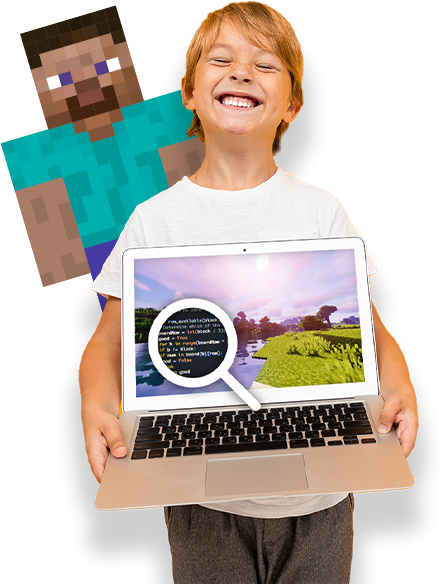
- Building a functioning shop in Minecraft to practise maths and economics
- Creating a Roblox game from scratch, learning Lua scripting along the way
- Designing pixel art to develop fine motor skills and creative expression
- Playing collaborative games to build communication and teamwork skills
- Using game design challenges to develop computational thinking
Every session has learning objectives mapped to the young person's individual plan. But the young person doesn't see a lesson plan — they see a fun activity with someone who genuinely cares about them.
The evidence is growing
This isn't just feel-good theory. Research from the University of Cambridge, the National Autistic Society, and numerous SEND-focused studies shows that game-based approaches significantly improve engagement, reduce anxiety, and build transferable skills in neurodivergent learners.
We see it every day. Young people who arrived refusing to speak are now leading group sessions. Kids who hadn't engaged with education for two years are earning qualifications. It works — not because gaming is magic, but because it meets young people where they are instead of demanding they come to us.
If you're a parent, SENCO, or commissioner wondering whether game-based mentoring might be right for a young person you're supporting, get in touch. We'd love to show you what's possible.